

E-bike Tyres
Ontrack was created in 2009 with firmly committed to the progression of more people riding bicycles by engineering and producing quality, long-lasting bicycle tires that are attainable by the masses.
Ontrack Dedicated to the needs of professional riders and commuters of the world, the value-focused Ontrack brand is driven to provide tires that any and every rider can depend upon.
Why Choose Us?
High quality
Our products are manufactured or executed to very high standards, using the finest materials and manufacturing processes.
Competitive Price
We offering a higher-quality product or service at an equivalent price. As a result we have a growing and loyal customer base.
Rich experience
Our company has many years of production work experience. The concept of customer-oriented and win-win cooperation makes the company more mature and stronger.
After-sale service
Professional and thoughtful after -sales team, let you worry about us after -sales Intimate service, strong after -sales team support.
-
 E-bike Tires LIGHTNINGLIGHTNING E-bike tires with serrated sides are the best choice for corning stability and great wet traction. Low rolling resistance, more ride comforts as well as excellent drainage performance canAdd to Inquiry
 -
 E-bike Tires MAKO SHARKMAKO SHARK E-bike tires with unique crown radian design cooperated with an enhanced tread base to provide unsurpassed wear-resistance and puncture resistance performance. Central directional andAdd to Inquiry
 -
 E-bike Tires SPECTRESPECTRE E-bike tires have smooth tread center for low rolling resistance coordinated with variety size of grooves is good for wet traction also. Lateral shoulder ramp knob provides effectiveAdd to Inquiry


- Email: info@ontrackcn.com
- Add:Building 24, No. 19 Haiwan Avenue, Xitangqiao Street, Haiyan County, Jiaxing City, Zhejiang Province, China
What is E-Bike Tyres?
Ebike tires play a crucial role in ensuring a smooth and safe ride. They are the only point of contact between the rider and the road, making them a vital component of any electric bike. Just like regular bicycle tires, ebike tires provide traction, stability, and control. However, due to the added weight and power of electric bikes, the importance of high-quality tires is even more pronounced.
Versatility: Fat tire e-bikes are truly all-terrain vehicles. They conquer challenging off-road terrain with ease, but they also perform admirably on paved surfaces. While not the fastest on smooth roads, they offer a comfortable and stable ride for casual cruising.
Top comfort: The increased air pressure limits and larger volume of fat tires translate to a significantly smoother ride. This is especially noticeable on bumpy roads or gravel paths. If comfort is a priority, fat tires are the clear winner.
Confidence on every ride
The superior grip and stability of fat tires inspire confidence, especially for new riders or those venturing onto unfamiliar terrain. You'll have better control and traction in loose gravel, corners, or even light snow.
Year-round fun
Don't let bad weather stop you! Fat tire e-bikes are built to handle anything Mother Nature throws at you. They’re the best electric bikes for snow, sand, and mud, allowing you to extend your riding season and explore year-round.
Puncture resistance
Flats can ruin a ride. The thicker construction of fat tires makes them less susceptible to punctures from debris on the road or trail. This means less time spent fixing flats and more time enjoying the ride.
Types of E-Bike Tyres
Road e-bike tires
Road e-bike tires feature narrow widths from 35-45 mm, smooth tread patterns focused on low rolling resistance, and durable sidewalls/casing to handle high speeds.
They excel on paved roads and cement bike paths providing efficiency and high speed. Road tires make ideal commuter tires.
Mountain e-bike tires
Mountain e-bike tires have aggressive block or lug tread patterns for traction on loose dirt, gravel, and uneven terrain. Widths range from 2.25-2.8 inches.
The sturdy casing withstands off-road abuse while the deep lugs grip everything from mud to rocks. Perfect for electric mountain bikes.
Hybrid e-bike tires
Hybrid tires strike a balance between on-road efficiency and off-road traction. With light tread patterns and moderate widths of 1.75-2 inches, they work on pavement and hard-packed dirt/gravel trails.
A versatile option for riding on streets and smooth backcountry roads.
Fat e-bike tires
Fat e-bike tires have oversized widths exceeding 4 inches. The ballooned profile provides flotation over sand, snow and other loose surfaces like beach cruising.
Lower psi levels further enhance traction and cushioning. An ideal upgrade for electric trail bikes.
Studded e-bike tires
Studded tires contain metal studs that protrude from the tread to directly grip icy surfaces. This specialized winter tire provides confidence-inspiring traction over snow and ice.
Tubeless e-bike tires
Tubeless tires feature an airtight casing that seals against the rim to avoid needing an inner tube. Liquid sealant inside plugs small punctures.
This prevents most flats for fewer interruptions while riding. Converting to tubeless tires is a popular e-bike upgrade.
Components of E-Bike Tyres
Casing
Your tire’s casing is what gives it structure and support. It affects the tire’s puncture resistance and even your ride quality. As you choose an e-bike tire, pick a casing that suits your riding style. If you love riding at high speed, choose a lightweight casing. But if you have an electric mountain bike, pick a heavier casing to help you stabilise your ebike.
Tread
Your ebike’s tread is the part that comes into contact with the road. It’s the part that gives your grip and traction. Just like the casing, pick a tread type that suits your riding goals.
Sidewall
The sidewall is the outer part of your tire between the tread and the tire's inner edge (the bead). They are stronger than a regular bike’s sidewall, so they can handle the extra weight of electric motors. As you shop for ebike tires, look for ones with sidewalls with special layers to prevent flat tires.

How to Maintain E-Bike Tyres
1.Regular inspections for wear and damage
Regular inspections are crucial for ensuring optimal performance and longevity of your e-bike tires.
When inspecting for wear, check the tire tread depth using a tread gauge or by examining the wear indicators on the tire surface.
Look for signs of uneven wear, such as bald spots or excessive wear on one side. Also, inspect the tires for visible damage like cuts, punctures, or bulges. These can compromise the tire's integrity and lead to unexpected blowouts while riding.
Remember to maintain proper maintenance practices, like maintaining appropriate tire pressure and avoiding overloading your e-bike.
2.Replacement frequency
Knowing when to replace your tires is essential to ensure optimal performance and safety. The lifespan of e-bike tires can vary depending on factors such as riding conditions, tire type, and maintenance practices. Signs of wear include visible cracks, bulges, or a worn-down tread pattern.
As a rule of thumb, experts recommend replacing your e-bike tires every 2,000-3,000 miles or when these signs become evident. By adhering to this optimal replacement time, you can extend the life of your tires while maintaining peak performance on your e-bike.
Remember that frequent replacements may seem costly initially but are necessary for ensuring a safe and enjoyable ride in the long run.
3.DIY maintenance tips
Try these easy and effective DIY maintenance tips to keep your electric bicycle performing at its peak.
A: Ensure you have the necessary maintenance tools, such as a tire pump, Allen wrenches, and a chain cleaner.
B: Regularly clean your e-bike using gentle cleaning techniques to remove dirt and grime that can affect its performance.
C: Regarding battery care, always follow the manufacturer's instructions for charging and storage.
D: Check your brakes regularly and make any necessary adjustments for safe stopping power.
E: Remember to lubricate your chain regularly with a bike-specific lubricant to reduce friction and extend its life.
How to Choose E-Bike Tires
Consider your riding terrain
Are you mostly riding on smooth city streets or rugged mountain trails? For city rides, thinner, smoother tires work well. For rough terrains, go for wider tires with more tread.
Tire size matters
Make sure the tire size matches your ebike. Larger tires (26-inch, 29-inch) offer more comfort and stability, especially on uneven surfaces. Smaller tires (20-inch) are more about maneuverability and portability.
Puncture resistance
If you're riding in areas with thorns, glass, or sharp rocks, consider tires with puncture-resistant features to avoid frequent flats.
Reflective sidewalls for safety
If you ride often in low-light conditions, tires with reflective sidewalls can enhance your visibility to others.
Seasonal considerations
In winter or snowy areas, studded tires can provide extra traction. In summer, you might prefer lighter, smoother tires.
Check compatibility with your ebike
Ensure the tires you choose are compatible with your bike’s fork and frame, especially if you're considering wider or non-standard sizes.
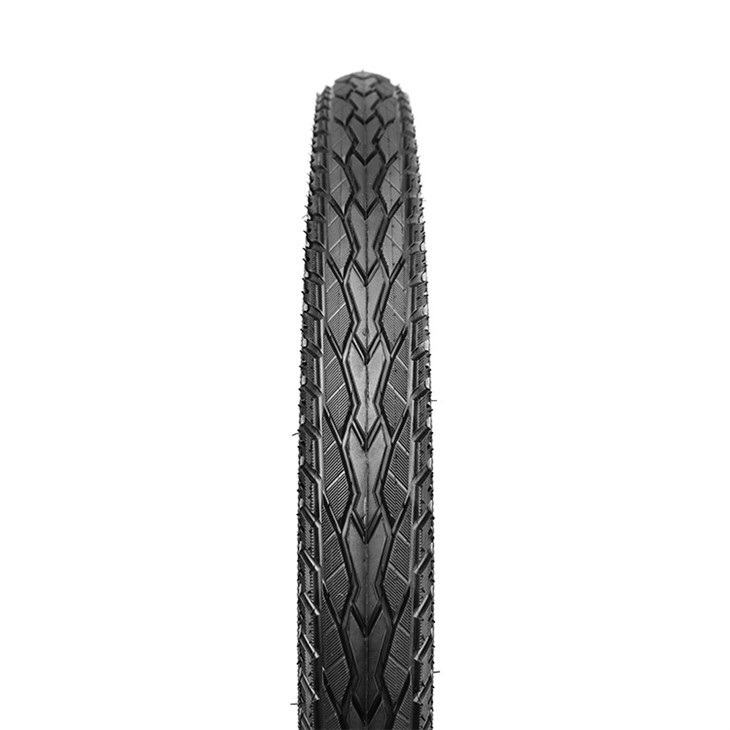
How to Tell When It’s Time to Replace Your E-Bike Tires
The lifespan of your e-bike tires depends on factors like how much weight you lug around, what kind of terrain you ride on, and your riding style, but most e-bike riders get around 1,000 to 3,000 miles out of their tires.
While this may seem like a lot of mileage, you may be surprised at how quickly your tires wear out once you start taking note of how often you ride your e-bike. Riding around on worn, old, or damaged tires is extremely dangerous and can seriously jeopardize your safety. With this in mind, you’ll want to regularly inspect your e-bike tires for the following signs that it’s time for a fresh set of rubber:
Worn down tread: Look for missing tread. While easy to do on off-road tires and tires with colorized tread wear indicators, this may be a bit tricky on road e-bike tires since they have shallow grooves. Inspect road tires carefully for signs of missing pattern — an indicator that new tire time has arrived.
Holes, tears, or cuts: No road or path is perfectly manicured and debris-free. Closely inspect your tires for holes or tears. If you find a hole or tear that penetrated the casing, replace your tire before riding again.
Cracks: As your e-bike tires age, the rubber becomes brittle and can be prone to cracking, especially if you leave your bike unused for a few years. If you spot any cracks on your bike tires, it’s definitely time to replace them.
Flat spots
Be on the lookout for the formation of a flat spot down the center line and squaring off to the side walls of your e-bike tires. Once this ridge gets more defined, you may notice poor handling and greater susceptibility to punctures.
Exposed casing
Once a tire has worn down past a flat spot, you may see white fibers threads poking through. These nylon threads reinforce and shape the casing, so you’re long overdue for new tires if they make an appearance.
Excessive flats
OK, for some riders, one flat is too many, but if you’re getting multiple flats in a week, there’s likely something wrong with your e-bike tires. Take a close look at your tires for any holes, tears, or flat spots that could be causing your frequent flats.
Bulges
If the rubber layers that make up your bike tires separate, you’ll notice visible bulges or bubbles, which indicate that the structure of the tire is compromised and requires replacement.
What Are the E-25 and E-50 Labels?
The E-25 and E-50 labels you'll find on some bicycle tires classify tires for electric bicycle use, based on their ability to meet standards for different terrain, speeds, and braking performance.
E-25 tires
The 25 refers to 26 kilometers per hour (kilometers are commonly used for eBike speed limits in Europe) which is 16.1 MPH. That's slower than most Class I and II eBikes can travel in the USA. Such tires are intended for leisure riding on pavement. If you ride faster, consider an E-50 tire instead.
E-50 tires
50 KPH is 31 MPH, faster than the Class III speed limit of 28 MPH in the United States. That means E-50 tires are a good match for higher speeds and more demanding terrain. Many tires for off-road riding are the E-50 type. Such tires can have superior wear characteristics, strength, and resistance to punctures (flats) which makes them desirable for riders who ride on multiple terrain types at higher speeds.
When it comes to checking and adjusting tire pressure, follow these essential steps:
1. Determine the recommended pressure for each tire
Every tire comes with specific pressure recommendations indicated on the sidewall. If not visible, reference the tire's specifications for guidance.
Road tires: Typically 80 - 130 psi
Mountain bike tires: Usually 25 - 35 psi
Hybrid tires: Range between 40 - 70 psi (Note: E-bikes may have recommended pressure in bar, which generally translates to 3 to 5 bar, equivalent to 42 to 70 psi.)
2. Identify valve type and condition
E-bikes commonly feature Presta or Schrader valves. Recognizing and assessing their condition is crucial:
Schrader valves: Common, resembling those on car tires.
Presta valves: Slimmer and longer, requiring an adapter for gauge and pump attachment.
Inspect tire condition
Check for signs of wear, including tread depletion and any visible damage or holes. A worn-out tire compromises safety and requires immediate replacement.
Utilize a pressure gauge
For accurate readings, rely on a tire gauge instead of approximations through hand squeezing. Ensure a snug fit of the gauge onto the valve for precise measurements.
Check and adjust pressure
Monitor tire pressure and make necessary adjustments to match the recommended range. Underinflated or overinflated tires pose risks to both rider and bike.
Electric Bicycle Wheel Size
16-inch e-bike wheel
A 16-inch wheel is more frequently found in a folding bicycle, which is known to use smaller wheels to reduce weight and, as such, keep the folded size as compact as possible. This ability ultimately allows the bikes to be easily transported. As expected, the quality of the riding is affected by the small size of the wheel. These wheels do not perform well on roads that are rough and bumpy. Because they are quickly affected by even small debris and rocks on the road. In addition, the small turning radius and wheelbase that characterized these kinds of wheels may lead to steering that has increased sensitivity. Having smaller wheels also require that the gear ratio is large enough to get the wheel turning fast enough. For this reason, riding uphill becomes difficult for these wheels.
20-inch e-bike wheel
Just like the 16-inch wheels, 20-inch wheels are likely to be found on a folding bike. However, they are more common than the 16-inch wheels. Because of their high quality of being easily maneuvered, they are the standard wheels for BMX tires. Although, riders might still experience some downsides to using these wheels, as they are also easily affected by rocks and obstacles compared to larger standard wheel sizes.
26-inch e-bike wheel
These wheels have a long history in the bike industry. They are likely the most common wheel size. They are easily suited for different types of bikes: mountain bikes, road bikes, and even beach cruisers. They have more width and are fatter, and as a result, they have more air volume to disperse as they climb over bumps. This feature makes the riding more comfortable than the earlier mentioned wheels. The 26-inches wheels are better suited for mixed terrains, this means that if you are going on-road and off-road, the 26-inch wheels are yours for the taking.
29-inch e-bike wheel
Bikes with this type of wheel were released some years ago. They have a much wider diameter and have less friction, with more ground contact. Having More contact with the ground automatically means better traction. These 29-inch wheels are tagged with the great advantage of having the ability to roll over obstacles while you are riding. Additionally, less energy is required to keep the bike going at a constant speed because they are better at storing their inertia. Furthermore, 29-inch E-bikes have a higher standover height. This means that if you're tall, this is a clear benefit. Though it can be difficult for short riders to fit in.
An additional disadvantage of big wheels is that they weigh more. Also, a longer wheelbase will reduce the maneuverability of the bike, making it slower and giving it a less efficient acceleration compared to bikes if smaller wheels. Bigger wheels transfer less torque to the ground when compared to smaller wheels, even for the same motor.
Ontrack was created in 2009 with firmly committed to the progression of more people riding bicycles by engineering and producing quality, long-lasting bicycle tires that are attainable by the masses.



FAQ
As one of the most professional e-bike tyres manufacturers and suppliers in China, we're featured by quality products and competitive price. Please rest assured to wholesale the best e-bike tyres for sale here from our factory.
e bike tires spectre, e bike tires lightning, e bike tyres