

Kids Bicycle Tyres
Ontrack was created in 2009 with firmly committed to the progression of more people riding bicycles by engineering and producing quality, long-lasting bicycle tires that are attainable by the masses.
Ontrack Dedicated to the needs of professional riders and commuters of the world, the value-focused Ontrack brand is driven to provide tires that any and every rider can depend upon.
Why Choose Us?
High quality
Our products are manufactured or executed to very high standards, using the finest materials and manufacturing processes.
Competitive Price
We offering a higher-quality product or service at an equivalent price. As a result we have a growing and loyal customer base.
Rich experience
Our company has many years of production work experience. The concept of customer-oriented and win-win cooperation makes the company more mature and stronger.
After-sale service
Professional and thoughtful after -sales team, let you worry about us after -sales Intimate service, strong after -sales team support.
-
 Kids Bicycle Tires WRANGLERThink back on where you rode your first bike. Down the driveway, through the neighbor’s garden,Add to Inquiry
 -
 Kids Bicycle Tires INTREPIDTread from bead to bread. Yup, you read that correctly. The INTREPID kids bicycle tires employ anAdd to Inquiry


- Tel: +86-571-86503869
- WhatsApp: +8615258836111
- Email: info@ontrackcn.com
- Add:Building 24, No. 19 Haiwan Avenue, Xitangqiao Street, Haiyan County, Jiaxing City, Zhejiang Province, China
What is Kids Bicycle Tyres?
Kids' bike tires generally feature a mountain-style tread for traction and confidence on a wide variety of terrain. Keep in mind that the more tread a tire has, the more grip it will provide off-road—but the tradeoff is a slower roll on pavement.
Benefits of Kids Bicycle Tyres
Shock absorption
Solid rubber tires would provide a much harsher ride compared to tires with inner tubes. The air-filled inner tube acts as a cushion, absorbing bumps and providing a more comfortable ride.
Weight
Solid rubber tires would be significantly heavier than tires with inner tubes. This added weight would make the bicycle harder to pedal and maneuver.
Rolling resistance
Tires with inner tubes can be inflated to different pressures, allowing riders to adjust the tire pressure based on the terrain and desired ride characteristics. Solid rubber tires would have a fixed level of rolling resistance, which might not be optimal for all riding conditions.
Puncture resistance
While solid rubber tires would be less prone to punctures, they are not immune to damage. When a solid tire gets damaged, it can be harder to repair or replace compared to fixing or replacing an inner tube.
Types of Kids Bicycle Tyres
Pneumatic (air) tyres
Arguably the most popular choice for balance bikes is pneumatic tyres. As with pedal bikes, pneumatic tyres are inflated with air so the rubber material is able to deform to the terrain and absorb impact to offer, overall, more comfortable ride.
There is a wide variety of tyre treads to choose from so you can choose the best type for the terrain your child will be learning to balance on. The tread pattern and flexible nature of rubber ensure a decent level of traction between your child’s balance bike, and the ground they’re exploring. This traction provides increased stability for your child and instils heaps of confidence in them to carry on progress their skills and carry on riding bikes. Another big advantage of pneumatic tyres is their lifespan, as rubber far outlives EVA foam and plastic tyres.
However, like the adult version of air-filled tyres, they are prone to suffering from flats which can be a nuisance when you’re out and about. Top tip: If you pop some tyre sealant in the tyre before you inflate it, this can help reduce the risk of getting a flat tyre! Another disadvantage of pneumatic tyres is that they are heavier than foam and plastic tyres. While some parents may argue that it makes the bike heavier for the child to manoeuvre, the general consensus is that a heavier tyre not only provides additional stability, but the additional weight is totally forgotten about when your child is whizzing around with a grin from ear-to-ear.
EVA foam tyres
A lighter and more affordable option over the pneumatic tyre is an EVA foam compound. These tyres aren’t air-filled, instead, they are filled with a hard rubber-type foam, which makes them lighter. The solid construction of these tyres retain their shape over time and they’re puncture-proof!
However, the rigid construction means they’re less compliant than pneumatic tyres, which can result in a bumpier ride, especially on gravel roads and for daredevils who like to roll off kerbs, lumps and bumps! Due to their stiffness, EVA foam tyres are best suited for smooth paved paths and for smaller riders who would benefit from a lighter option.
Bead: The tire's bead holds the tire onto the rim and is only applicable for clincher and tubeless tires. The bead is typically made from either wire or kevlar, wire featuring on inexpensive tires, kevlar featuring on more premium options. Clincher tires with kevlar beads are also referred to as 'folding' tires.
Casing: The casing is the foundation of the tire, connecting the beads to one another and providing enough resistance from stretch to keep the air in while conforming to the ground surface. The casing is made from either nylon, cotton or silk and measured in 'threads per inch' or 'TPI'. Tires with a lower TPI count (e.g: 60 TPI) provide good puncture protection but poor rolling resistance, conversely, tires with high TPI counts (120 TPI +) provide a more supple ride with good rolling resistance but often with reduced puncture protection.
Puncture protection: In order to improve their resistance to punctures many tires will add a 'sub-tread' layer or 'puncture proof belt'. Some tires will simply feature more rubber, increasing the thickness of the tread, while others will use specific compounds to enhance their resilience. Sub-layers increase a tire's rolling resistance and add weight, and so it is a balancing act for manufacturers to create a fast, lightweight tire that can offer good levels of puncture protection. Some sturdier tires designed for winter training and commuting will feature puncture protection in the sidewall too.
Sidewall: This is literally the side of the tire, and is part of the casing that isn't intended to touch the ground, as a consequence this part of the tire is the thinnest. Important details such as the wheel and tire size, and recommended tire pressure will be found on the sidewall.
Tread: Tread is the part of the tire that contacts the ground and will be made from varying compounds with different tread patterns depending on it's intended use.
Find a clean and flat surface to work on. If possible, prop up the bike on a bike stand or turn it upside down on the handlebars and seat.
Release the brake. You may need to use a wrench to release the cable tension.
Remove the wheel from the bike. If you have a quick-release skewer, flip open the lever and unscrew it from the axle. If you have bolt-on axles, use a wrench to remove the nuts.
Deflate the tube and break the tire bead of one side of the rim (with your hands). Use the tire levers to pry the tire off the rim, starting at the bead opposite the valve stem. Work your way around the tire, lifting the bead over the rim. Be careful not to damage the inner tube.
Gently pull the valve stem out and remove the tube from the tire.
Remove the tire fully from the rim. Use the tire levers to pry the tire off the rim. Work your way around the tire, lifting the bead over the rim.

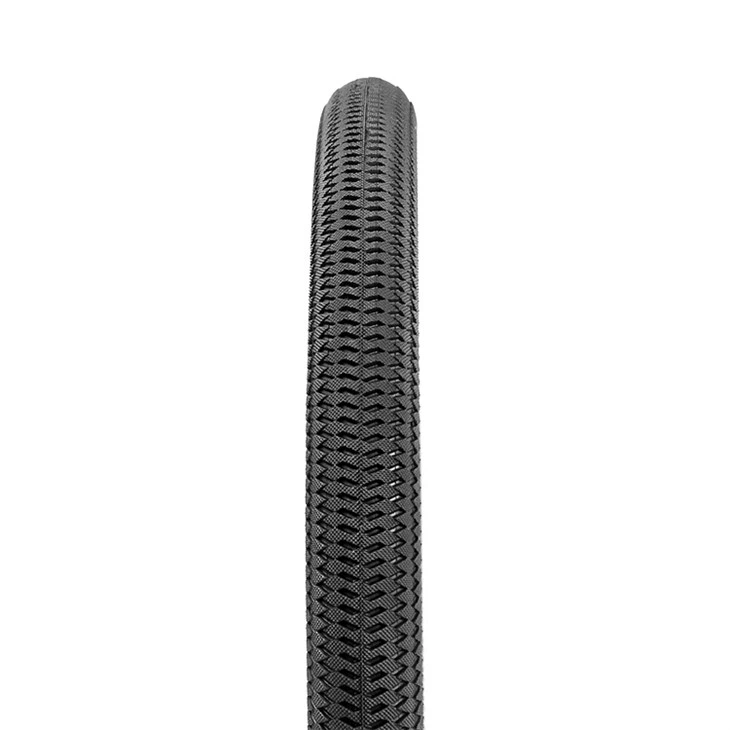
Check the tube for damage. Inflate and inspect the for any cuts, punctures. If the tube is damaged, patch it or replace it with a new one.
Insert one bead of the new tire onto the rim. Insert the valve stem into the hole and pump up the tube slightly so it takes shape.
Work the second tire bead around the rim using your thumbs to push the bead onto the rim. You may need to use a tire lever to get the last of the bead on the rim. Be careful not to pinch the inner tube.
Fully Inflate the tire. Check the recommended pressure range printed on the tire sidewall.
Reinstall the wheel. Insert the axle into the dropouts on the frame. If you have a quick-release skewer, tighten it by flipping the lever closed. If you have bolt-on axles, tighten the nuts with a wrench. Make sure the wheel is centered and secure.
Check the brakes. Squeeze the brake levers to make sure the pads are lined up with the rim. If necessary, adjust the brake pads and cable tension.
How to Maintain Kids Bicycle Tyres
Keep your tires properly inflated.
It’s best to have a good pump at home to keep your tires at the right pressure.
Bike tires are inflated with either Schrader or Presta valves. Schraders are short and squat, and look similar those you see on a car. Prestas are skinnier, with a little valve at the tip, and are most commonly seen on road bikes. Any good pump will have a pressure gauge and will be compatible with both Schrader and Presta valves.
Depending on pressure, tire size, and use, you should add air to your tires anywhere from every ride to every couple weeks. If your tire goes flat in a week or less, you have a slow leak. It is normal for many tires to drop to a low pressure within a couple months if not maintained — just like car tires, air escapes the valve. Because bike tires hold less air and are typically at a higher pressure than car tires, they need air added more frequently. Give your tires a squeeze before every ride to make sure they feel right.
Tire Pressure Adjustment for Different Riding Conditions
Understanding how to adjust your child’s bike tire pressure according to different riding conditions is essential for optimal performance and safety. Different road surfaces, weather conditions, and terrains can all affect the appropriate tire pressure.
Wet or slippery surfaces
When riding on wet or slippery surfaces, slightly reducing tire pressure can improve traction and stability. Lower tire pressure allows the tire to deform and provide a larger contact area with the ground, which can result in better grip on slick surfaces.
01
Off-road or bumpy terrain
Lower tire pressure can also be beneficial when riding on off-road or uneven terrains. A softer tire can better absorb impacts and provide increased traction on loose or rocky surfaces.
02
Sandy or soft surfaces
In situations where the ground is soft or sandy, a slightly lower tire pressure may help prevent the tires from sinking into the surface, thus maintaining momentum and control.
03
Cold weather
Air pressure inside tires can decrease in cold weather, so it’s crucial to check tire pressure more frequently during winter months. Consider adding a few extra PSI to compensate for the cold temperatures.
04
Tire Selection: Tips for Choosing Kids Bike Tires
Tires are a key component of a bicycle that directly affect performance, safety, and comfort. When selecting tires for a children's bicycle, several factors need to be taken into account.
Tire size and width
Tire size must match the wheel size of the bicycle. Width is also important; wider tires provide more stability and comfort, especially on rough surfaces. Narrower tires are suitable for smoother, paved surfaces and can offer better speed and handling.
Puncture resistance
Children’s bikes often encounter rough use, which can lead to frequent punctures. Tires with reinforced sidewalls or puncture-resistant layers can be beneficial.
Tire tread
The tread pattern on a tire determines its grip and suitability for different terrains:
Smooth or slick tires: Best for pavement and smooth surfaces. They provide less rolling resistance and are ideal for road riding.
Knobby tires: Have a pronounced tread pattern, providing better grip on dirt, gravel, and off-road conditions. Suitable for adventurous kids who ride on varied terrains.
Semi-slick tires: A hybrid between slick and knobby tires, offering a balance of speed on pavement and grip on rougher surfaces.
Air pressure and tubeless options
Maintaining the correct air pressure is essential for tire performance. Higher pressure reduces rolling resistance and increases speed but can be less comfortable. Lower pressure offers better grip and comfort but may increase the risk of punctures.
Tubeless tires are becoming more popular for children's bicycles. They eliminate the need for an inner tube, reducing the risk of pinch flats. Tubeless setups can be run at lower pressures, providing better traction and comfort without the risk of pinch flats.
Material and durability
Tires made from high-quality rubber compounds offer better grip and durability. Investing in good quality tires can enhance the bike's performance and longevity. Cheaper tires may wear out quickly or fail to provide adequate grip, especially in wet conditions.
Weather and terrain considerations
Consider the typical riding conditions:
Wet conditions: Tires with deeper tread patterns can provide better grip on wet surfaces. Rubber compounds designed for wet weather can also enhance traction.
Dry conditions: Slick or semi-slick tires may be sufficient, providing a smooth and fast ride.
Mixed terrain: Semi-slick or lightly treaded tires can offer a good balance for varied riding conditions.
Tire pressure is important to a kid's riding experience. A properly inflated tire will make the bike perform better, and help reduce the risk of flat tires.
The basics
PSI. PSI or “pounds per square inch” is simply the measure of pressure resulting from a force of one pound-force applied to an area of one square inch. This gives us a number which we can use as reference for how much or little air is in the tire. Most quality bicycle pumps have gauges which read in PSI but pump gauges are often inaccurate. A dedicated pressure gauge will give you a more accurate reading.
All pneumatic tires, like car tires and bicycle tires, are pressurized by an “air-tight” chamber. In bicycles, this sealed air chamber is either a tube or a sealed tubeless tire. The higher the PSI, the harder the tire. The lower the PSI, the softer the tire.
Measuring tire pressure
With experience you can often check tire pressure by squeezing the tire with your thumb. For neighborhood riding, a good rule is that the tire should feel about as firm as a soccer ball. For casual neighborhood riding, a thumb pressure check is often enough to make sure the tire pressure is within a safe operating range. During certain types of riding, like trail riding, small differences in tire pressure can make a big difference. So, many performance oriented riders use pressure gauges almost every ride.
Tire width and tire pressure
Tires require a certain amount of air pressure to prevent them from bottoming out on the rim. Because wider mountain bike tires have more air volume, it is possible to ride them at lower pressures, increasing both comfort and traction on the trail. By comparison, narrower road tires have much less volume so they need more PSI to prevent bottoming out and pinch flats.
Ontrack was created in 2009 with firmly committed to the progression of more people riding bicycles by engineering and producing quality, long-lasting bicycle tires that are attainable by the masses.



FAQ
As one of the most professional kids bicycle tyres manufacturers and suppliers in China, we're featured by quality products and competitive price. Please rest assured to wholesale the best kids bicycle tyres for sale here from our factory.
kids bicycle tires wrangler, kids bicycle tires intrepid, kids bicycle tyres