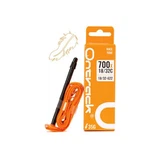
Hey there, fellow cycling enthusiasts! As a supplier of bicycle valves, I get asked a ton of questions about the ins and outs of these little but crucial components. One question that pops up more often than you'd think is, "What is the correct pressure for a bicycle valve?" Well, buckle up (or should I say, pump up), because I'm about to break it down for you.
Let's start with the basics. A bicycle valve is like the gateway to your tire's air supply. It's what allows you to add or release air, and getting the right pressure is essential for a smooth, safe, and efficient ride. But here's the thing – there's no one - size - fits - all answer when it comes to the correct pressure. It depends on a bunch of factors, and I'm going to walk you through each one.


Tire Type
First off, the type of tire you have plays a huge role. There are basically two main types: tube tires and tubeless tires. Tube tires have an inner tube inside the tire casing, while tubeless tires don't.
Tube Tires: These are the traditional type of bicycle tires. They're generally more forgiving when it comes to pressure. The recommended pressure for tube tires usually ranges from 30 to 90 psi (pounds per square inch). Road bikes typically require higher pressure, often between 80 and 120 psi. This high pressure reduces rolling resistance, which means you can go faster with less effort. Mountain bikes, on the other hand, usually have lower pressure, around 30 to 50 psi. The lower pressure provides more traction on rough terrain, allowing your tires to grip the ground better.
Tubeless Tires: Tubeless tires are becoming increasingly popular, and for good reason. They offer better puncture resistance and can be run at lower pressures than tube tires. You can find a Bicycle Tubeless Valve that's perfect for your setup. With tubeless tires, you can often run pressures as low as 20 psi on mountain bikes, which gives you an even better grip on the trails. On road bikes, tubeless tires can still be run at relatively high pressures, but you might be able to get away with a bit less than tube tires, say 70 to 100 psi.
Rider Weight
Your weight also matters a great deal. Heavier riders need more pressure to support their weight and prevent the tire from bottoming out. For example, if you're a 200 - pound rider, you'll probably need to run your tires at a higher pressure than a 120 - pound rider. As a general rule of thumb, for every 10 pounds of additional weight, you might want to increase the pressure by about 2 psi. But this is just a rough estimate, and you'll need to experiment a bit to find what works best for you.
Riding Conditions
The conditions in which you ride are another important factor. If you're riding on smooth, paved roads, you can afford to run higher pressures. The smooth surface doesn't require as much traction, so you can focus on reducing rolling resistance. However, if you're riding on gravel, dirt, or rough trails, lower pressures are better. The lower pressure allows the tire to conform to the uneven surface, providing more traction and a more comfortable ride.
How to Check and Adjust Pressure
Now that you know what affects the correct pressure, let's talk about how to check and adjust it. You'll need a good quality pressure gauge. There are two main types: analog and digital. Analog gauges are the traditional kind, with a needle that points to the pressure reading. Digital gauges are more modern and usually give a more accurate reading.
To check the pressure, simply attach the gauge to the valve stem. Make sure it's a snug fit, or you'll get an inaccurate reading. If the pressure is too low, you'll need to add air. You can use a hand pump or a floor pump. Hand pumps are portable and great for on - the - go adjustments, while floor pumps are more powerful and can fill your tires up faster.
If the pressure is too high, you can release some air by pressing the small pin in the center of the valve stem. Just be careful not to let out too much air at once.
Why Correct Pressure Matters
Getting the correct pressure isn't just about having a comfortable ride. It also affects the lifespan of your tires and your safety. If your tires are under - inflated, they're more likely to get punctured. The sidewalls of the tire will flex more, which can cause them to wear out faster. Under - inflated tires also increase rolling resistance, which means you'll have to work harder to pedal.
On the other hand, over - inflated tires are more prone to bouncing and skidding. They also provide less traction, which can be dangerous, especially when cornering or braking. And just like under - inflated tires, over - inflated tires can wear out faster, as the center of the tire will bear most of the weight.
Finding Your Sweet Spot
So, how do you find the correct pressure for your bicycle valve? It's all about experimentation. Start by following the recommended pressure range on the side of your tire. Then, go for a ride and pay attention to how your bike feels. If it feels too bouncy, your pressure might be too high. If it feels sluggish and the tires seem to be dragging, your pressure might be too low.
Make small adjustments to the pressure and go for another ride. Keep doing this until you find the sweet spot where your bike feels comfortable, responsive, and efficient. It might take a few tries, but once you find it, you'll notice a huge difference in your riding experience.
Conclusion
In conclusion, the correct pressure for a bicycle valve depends on a variety of factors, including tire type, rider weight, and riding conditions. There's no magic number, but by understanding these factors and doing a bit of experimentation, you can find the perfect pressure for your bike.
As a bicycle valve supplier, I'm here to help you with all your valve needs. Whether you're looking for a Bicycle Tubeless Valve or a traditional tube valve, we've got you covered. If you're interested in purchasing our high - quality bicycle valves or have any questions about pressure or valve selection, don't hesitate to reach out. We're always happy to assist you in finding the right products for your cycling adventures.
References
- "Bicycling Science" by David Gordon Wilson
- Various cycling forums and blogs where riders share their experiences with tire pressure.