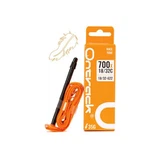
Hey there, fellow cycling enthusiasts! As a supplier of bicycle tyre liners, I've had my fair share of questions about what these little lifesavers are made of. So, I thought I'd take the time to break it down for you in this blog post.
First off, let's talk about why tyre liners are important. If you've ever had a flat tire, you know how much of a pain it can be. Tyre liners act as an extra layer of protection between your tire and the rim, helping to prevent punctures from things like thorns, glass, and other sharp objects on the road. They're like a shield for your tires, and they can save you a lot of time and hassle in the long run.
Now, let's get into the nitty-gritty of what bicycle tyre liners are made of. There are several different materials commonly used, each with its own set of pros and cons.
Rubber
Rubber is one of the most traditional materials used for bicycle tyre liners. It's flexible, durable, and provides good protection against punctures. Rubber liners are also relatively inexpensive, making them a popular choice for budget-conscious cyclists.
One of the main advantages of rubber liners is their ability to conform to the shape of the tire and rim. This means they can provide a snug fit, which helps to prevent movement and reduces the risk of the liner shifting and causing a flat. Rubber liners are also resistant to abrasion, which means they can withstand the wear and tear of regular use.


However, rubber liners do have some drawbacks. They can be heavy, which can add extra weight to your bike and affect your performance. Rubber liners also tend to absorb moisture, which can make them more prone to rotting over time. Additionally, rubber liners may not provide as much protection against sharp objects as some other materials.
Polyester
Polyester is another common material used for bicycle tyre liners. It's lightweight, strong, and resistant to stretching. Polyester liners are also relatively inexpensive, making them a popular choice for cyclists who want a good balance of performance and affordability.
One of the main advantages of polyester liners is their ability to provide excellent puncture protection. Polyester is a strong material that can resist the penetration of sharp objects, such as thorns and glass. Polyester liners are also lightweight, which means they won't add much extra weight to your bike.
However, polyester liners do have some drawbacks. They can be less flexible than rubber liners, which means they may not conform to the shape of the tire and rim as well. This can make them more prone to movement and may increase the risk of the liner shifting and causing a flat. Polyester liners are also more prone to abrasion than rubber liners, which means they may not last as long.
Kevlar
Kevlar is a high-strength synthetic fiber that is commonly used in bulletproof vests and other high-performance applications. It's extremely strong, lightweight, and resistant to cutting and abrasion. Kevlar liners are the most expensive option, but they also provide the best puncture protection.
One of the main advantages of Kevlar liners is their ability to resist the penetration of sharp objects. Kevlar is a very strong material that can withstand a lot of force, which means it can provide excellent protection against punctures. Kevlar liners are also lightweight, which means they won't add much extra weight to your bike.
However, Kevlar liners do have some drawbacks. They can be more expensive than other materials, which may not be suitable for budget-conscious cyclists. Kevlar liners are also more difficult to install than other materials, which may require some technical skills. Additionally, Kevlar liners may not be as flexible as rubber or polyester liners, which means they may not conform to the shape of the tire and rim as well.
Foam
Foam is a relatively new material that is being used more and more in bicycle tyre liners. It's lightweight, flexible, and provides good shock absorption. Foam liners are also relatively inexpensive, making them a popular choice for cyclists who want a comfortable ride.
One of the main advantages of foam liners is their ability to provide a smooth and comfortable ride. Foam is a soft material that can absorb the shock of bumps and vibrations on the road, which means it can reduce the amount of fatigue you feel while cycling. Foam liners are also lightweight, which means they won't add much extra weight to your bike.
However, foam liners do have some drawbacks. They may not provide as much puncture protection as other materials, which means they may not be suitable for cyclists who ride on rough or debris-filled roads. Foam liners are also more prone to compression than other materials, which means they may lose their shape over time and may not provide as much protection.
So, there you have it! Those are the main materials used for bicycle tyre liners. Each material has its own set of pros and cons, so it's important to choose the one that's right for you based on your riding style, budget, and personal preferences.
If you're in the market for a new bicycle tyre liner, I encourage you to check out our selection of Bicycle Tyre Liners. We offer a wide range of liners made from different materials, so you're sure to find the one that's right for you.
In addition to tyre liners, we also offer a variety of other cycling accessories, including Bicycle Wheel Rim Tape and Bicycle PVC Rim Tape. Our products are made from high-quality materials and are designed to provide excellent performance and durability.
If you have any questions about our products or need help choosing the right one for you, please don't hesitate to contact us. We're here to help you get the most out of your cycling experience.
Thanks for reading!
References:
- "Bicycle Tire Liners: What They Are and How They Work" by Bicycling.com
- "The Best Bicycle Tire Liners for Puncture Protection" by GearLab
- "Choosing the Right Bicycle Tire Liner" by REI Co-op